
Your cart
There are no more items in your cart
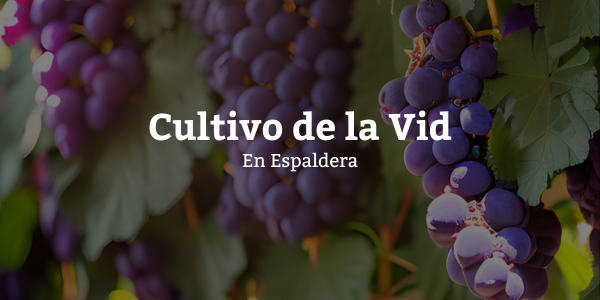
The cultivation of the vine is an age-old practice that has evolved over the centuries, adapting to human needs and to the particular characteristics of each wine-growing region. Today, we would like to share with you a fundamental aspect of our work: trellised vine cultivation.
What Is a Trellised Vine?
A trellised vine is a training system used for the vine—a naturally climbing plant—that aims to optimise both yield and the quality of the wine produced. This system structures the vines and the way they are planted in order to improve both the quantity and quality of the grapes.
The vine is attached to a permanent structure called a trellis, which allows each plant to be shaped as desired and its growth to be controlled. In this way, the branches grow only in the intended direction.
Why Grow Vines on a Trellis?
Trellised vine cultivation offers multiple advantages. Firstly, it allows for the mechanisation of agricultural processes such as harvesting, since machines can pass between the vineyard rows without damaging the vines trained on the trellis.
In addition, this system facilitates irrigation, as one of the wires can be used to hold an irrigation hose. It also allows for better use of space, enabling more vines to be planted in the same cultivation area.
In terms of maintenance, the trellis makes pruning, the application of phytosanitary treatments and other routine tasks much easier. And regarding grape quality, this system improves air circulation and increases sun exposure of the clusters, resulting in more uniform bunches in terms of fruit size and ripening.
What Is the Structure of a Trellis Like?
A trellis is composed of a series of wires fixed to posts. There are two types of posts and two types of wires.
Head posts are placed at the beginning of each row where the vines will be planted. These posts are robust and taller, as they bear the tension of the entire row.
Intermediate posts, on the other hand, are placed along the row and help distribute the weight and support the wires at different heights, depending on the growth of the vines.
Regarding the wires, training wires are installed during the vine’s formative phase and are thicker, while vegetation wires are placed at various levels to control the growth of the vines as they develop.
How Are the Branches Attached to the Trellis?
Various materials are used to attach the branches to the trellis, ranging from natural materials such as raffia to plastics or thin wires. The key is to avoid strangling the vine by using ties that are too tight.
Types of Trellis
There are two main types of trellis, classified according to their height.
Low trellises are ideal for cold climates, as the vine grows closer to the ground and can better capture the available heat.
High trellises, on the other hand, can reach up to two metres in height, although the ideal height is around 1.70 metres to make harvesting easier.
When Is It Advisable to Plant Vines on a Trellis?
The trellis system allows for higher yields and can increase production by up to 25% per harvest. Although the initial investment is high, it can be quickly recouped. It is suitable for rich soils and helps protect vines in colder climates.
Although goblet-trained vines are often associated with higher-quality wines, trellised cultivation can maintain high quality standards when accompanied by manual harvesting and careful plant maintenance.
Trellised Vine Cultivation at Bodegas Romale
At Bodegas Romale, we are proud to be part of this tradition, and today we would like to share with you one of the fundamental aspects of our work: trellised vine cultivation.
Our commitment to quality and tradition leads us to choose this system, which allows us to obtain grapes of the highest quality while respecting the environment and the unique characteristics of our terroir.
In our vineyards, every vine is cared for with dedication, respecting its natural rhythm and always seeking the perfect balance between the plant and its surroundings.
The result of this effort is reflected in every bottle of wine we produce—a true expression of the character and personality of our land.
The Future of Trellised Vine Cultivation
The future of trellised vine cultivation is promising. As technology advances and viticulturists gain greater knowledge of best growing practices, this system will continue to evolve and adapt to the needs of the sector.
At Bodegas Romale, we are committed to innovation and continuous improvement, and we will continue to explore new ways of optimising our trellised vine cultivation to offer our customers wines of the highest quality.
Comments (0)