
Your cart
There are no more items in your cart
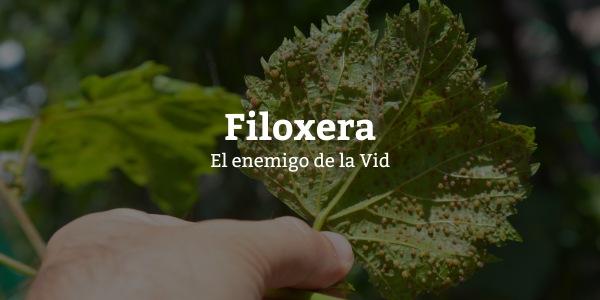
Phylloxera (Phylloxera vastatrix) is a tiny insect that has played a crucial role in the history of viticulture. Native to the United States, this aphid feeds on the leaves and roots of the vine and is recognised as the vine’s most fearsome enemy. It was first identified in 1854 in the United States and arrived in Spain in 1878.
The Impact of Phylloxera on Viticulture
Phylloxera has had a devastating impact on European viticulture. During the second half of the 19th century, Europe’s vineyards were attacked by three pests of American origin, triggering an unprecedented winemaking crisis. Two of these pests, oidium and mildew, are caused by fungi and could only be controlled by chemical treatments. However, phylloxera, a minuscule insect, destroyed the vine’s roots, causing the plant to die.
In Spain, the first record of phylloxera was in Málaga in 1878. As it spread, it wiped out virtually all European vines. It did not fully colonise the entire territory, as the root form cannot develop in sandy soils — a fact that enabled many varieties to be saved and later grafted onto resistant American vines.
The Life Cycle of Phylloxera
The biological cycle of this parasite is very complex, as it adopts different forms during various stages of its life. There is a gall-forming type, or leaf phylloxera, which consists of wingless females that reproduce by parthenogenesis (without fertilisation), and a root form, or root phylloxera, which is the most damaging. The cycle differs between American vines, where it completes its full cycle, and European vines, where only the root phase occurs.
Symptoms and Consequences of Phylloxera
Attacks on the plant’s roots are characterised by swellings in the form of nodules or tuberosities, which interrupt the flow of sap. In its gall form, the attack appears on the upper surface of the leaves as a kind of swelling or gall caused by the insect’s egg-laying.
During the first year of infestation, the effects are almost imperceptible. However, in the following year the leaves lose their vigour and the chlorophyll at their edges disappears, turning them yellowish. The grapes fall before ripening due to root rot, and the plant eventually dies.
Strategies for Protection Against Phylloxera
The only effective protection strategy against phylloxera is the planting of resistant rootstocks. The solution (sourced from the same place the pest originated) was found by grafting the sensitive European vine onto an American vine resistant to phylloxera. This prevented the total extinction of the European varieties we know today. For this reason, since the late 19th century, American species (American vines) have been used as rootstocks for Vitis vinifera.
Phylloxera and Science
The National Museum of Natural Sciences (MNCN-CSIC) preserves valuable material from a study conducted by its former director, Mariano de la Paz Graells, on this pest. Graells was deeply interested in studying insects that caused crop diseases and in the ways farmers could protect themselves from them. In 1881, he published a highly detailed 1,014-page report on phylloxera, covering zoological, agronomic, phytosanitary, legal and other aspects.
Comments (0)