
Your cart
There are no more items in your cart
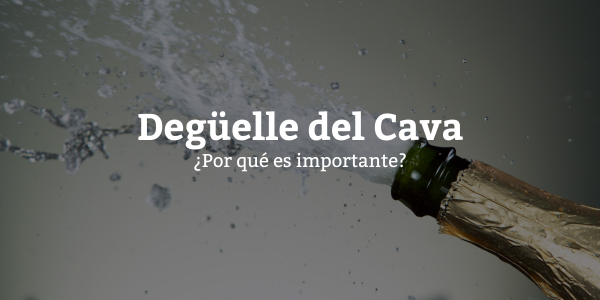
Disgorgement: An Essential Process in Cava Production
“Disgorgement” is a term that resonates strongly in the world of sparkling wines. It is an essential technique in the production of cavas and champagnes, and at Bodegas Romale, it is one of our specialities. But what exactly is disgorgement, and why is it so important?
What Is Disgorgement?
Disgorgement is the operation of removing the lees (yeasts) from the second fermentation in cavas or sparkling wines made using the traditional method, also known as the champenoise method. During the second fermentation, the yeasts remain inside the bottle, and before the wine is released to the market, they must be removed to ensure clarity in the glass.
Disgorgement and the Champenoise Method
Disgorgement is not an isolated process; it is an integral part of the Champenoise or traditional method. This classic method of producing sparkling wines is based on a second fermentation that occurs inside the bottle.
What Is the Champenoise Method?
After the first fermentation, a mixture of yeast and sugar, known as the “tirage liquor,” is added to the wine. The yeasts convert the sugar into alcohol and carbon dioxide, which remains trapped inside the bottle. After 6–8 weeks—the time required for the second fermentation to complete—the bottles are placed horizontally and left for a minimum of nine months. This is the period of ageing on the lees in the bottle.
During this time, the carbon dioxide produced integrates into the wine, and tertiary aromas develop due to yeast autolysis. When the sparkling wine is ready, the riddling or “remuage” process is carried out, in which the bottles are gradually rotated to a vertical position (neck down). This concentrates all the sediment in the neck of the bottle. It is after this step that disgorgement takes place.
Disgorgement in the Champenoise Method
In the Champenoise method, disgorgement is the procedure used to remove the sediment that riddling has concentrated in the neck of the bottle. The bottles are immersed in a very cold solution (around -27ºC), freezing the neck along with the sediment. The bottle cap is then removed, and the internal pressure expels the ice containing the sediment.
Mechanical Disgorgement
For mechanical disgorgement, the necks of the bottles are immersed in a refrigerant liquid to freeze them, allowing the lees to be expelled without losing carbon dioxide. However, the process can also be carried out manually, though this requires a true expert, known as a “disgorger,” to perform manual disgorgement.
Manual Disgorgement
Manual disgorgement is an art in itself. It is not easy to calculate the exact amount of liquid that must be expelled to clean the bottle of sediment without losing too much carbonation or cava.
The Importance of the Disgorgement Date
From the date of disgorgement to consumption, no more than a couple of years should pass. This is because, once disgorged, the cava has completed its ageing and begins its decline. For this reason, it should not be stored for too long at home, as it may start to lose its qualities.
Disgorgement at Bodegas Romale
At Bodegas Romale, disgorgement is more than just a process; it is a philosophy. We strive to offer our customers sparkling wines of the highest quality, and disgorgement is an essential part of that commitment. Through mechanical disgorgement, we ensure that every bottle leaving our cellar is at its optimal point for consumption. Every time you enjoy a wine from Bodegas Romale, you are savouring the result of a process carefully perfected over the years.
Comments (0)