Introduction to Residual Sugar in Cava
Residual sugar, a term referring to the amount of sugar remaining in wine after fermentation, plays a crucial role in the production of Cava, Spain’s famous sparkling wine. This sugar left in the wine contributes to its sweetness and can significantly affect its flavour and texture.
Residual sugar is an essential component in creating a balanced Cava. It provides sweetness that complements the wine’s natural acidity, resulting in a drink that is both refreshing and satisfying.
Types of Cava According to Sugar Content
There are several types of Cava, each with a different level of residual sugar:
- Brut Nature: Contains 0–3 grams of residual sugar per litre. No sugar is added after the second fermentation, producing a very dry Cava.
- Extra Brut: Contains up to 6 grams of sugar per litre. Like Brut Nature, it is quite dry.
- Brut: Contains up to 12 grams of sugar per litre. Slightly sweeter than Brut Nature and Extra Brut.
- Extra Seco (Extra Dry): Despite its name, this Cava is sweeter than Brut, with 12–17 grams of sugar per litre. It offers a balance between sweetness and acidity, making it versatile for food pairing.
- Seco (Dry): Contains 17–32 grams of sugar per litre, making it noticeably sweeter than Extra Seco. It retains good acidity while offering perceptible sweetness.
- Semi-Seco (Semi-Dry): Even sweeter, with 32–50 grams of sugar per litre. Ideal for those who prefer a clearly sweet sparkling wine.
- Dulce (Sweet): The sweetest Cava, with over 50 grams of sugar per litre. Rich and sweet, often served with desserts or enjoyed on its own.
Each type of Cava provides a unique tasting experience. Drier Cavas such as Brut Nature and Extra Brut have sharper, more acidic flavours, while sweeter Cavas tend to taste rounder and softer.
The Cava-Making Process and Residual Sugar
The production of Cava is a delicate balance involving grape fermentation, the addition of yeast and sugar, and a period of ageing. Residual sugar in Cava is a natural result of this process.
After the first fermentation, a mixture of yeast and sugar, known as the liqueur de tirage, is added to the wine to initiate the second fermentation. During this process, the yeast consumes sugar and produces alcohol and carbon dioxide, creating the bubbles characteristic of Cava.
Once the yeast has consumed all the sugar it can, it dies and settles at the bottom of the bottle. At this stage, the Cava may retain some residual sugar, depending on how much sugar was initially added and how much the yeast consumed.
Residual sugar can significantly influence a Cava’s flavour and texture. A higher level of residual sugar produces a sweeter, less acidic Cava, while a lower level results in a drier, more acidic wine.
Residual Sugar in Cava Production at Bodegas Romale
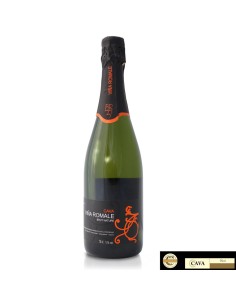
At Bodegas Romale, we understand the importance of residual sugar in producing our Cava. Our production process is meticulously managed to ensure that every bottle achieves the perfect balance of sweetness and acidity.
We carefully calculate the amount of sugar added in the liqueur de tirage to initiate the second fermentation. This sugar not only feeds the yeast but also contributes to the residual sugar in the Cava. This residual sugar provides our Cavas with their characteristic sweetness while balancing the natural acidity of the grapes.
The result is an exceptional Cava, offering a harmonious sweetness and a refreshing acidity, achieved only through careful management of residual sugar.
Residual Sugar in Other Sparkling Wines
Residual sugar is not exclusive to Cava; it also plays a crucial role in other sparkling wines such as Champagne and Prosecco. However, the handling of residual sugar differs among these wines.
In Champagne, residual sugar is often very low, producing the sharp acidity and dry flavour the style is known for. Prosecco, on the other hand, often has a higher level of residual sugar, resulting in a sweeter, fruitier flavour.
These differences in residual sugar significantly impact the taste and texture of each sparkling wine. Understanding how residual sugar is managed in Cava is essential for appreciating the wine’s final quality and flavour.
Research and Development in Residual Sugar
Residual sugar is an active area of research in enology. Scientists are studying how residual sugar affects the flavour and texture of Cava and other sparkling wines.
Research includes exploring new ways to control residual sugar, examining how different levels influence taste and texture, and investigating how residual sugar can be used to improve wine quality.
Conclusion
Residual sugar is a vital component in producing high-quality Cava. By carefully managing residual sugar, we can create Cavas that are balanced, refreshing, and delicious.
At Bodegas Romale, residual sugar is used to craft Cavas that are rich, complex, and truly exceptional. It is also a focus of ongoing research, as enologists and scientists seek to understand this process better and use it to further enhance Cava quality.
Ultimately, residual sugar is one of the many techniques we employ at Bodegas Romale to ensure that every bottle of Cava we produce meets the highest standards. It is part of our commitment to excellence and our passion for creating sparkling wines that delight and surprise every time they are enjoyed.






Comments (0)